
Introduction to Instructional Design
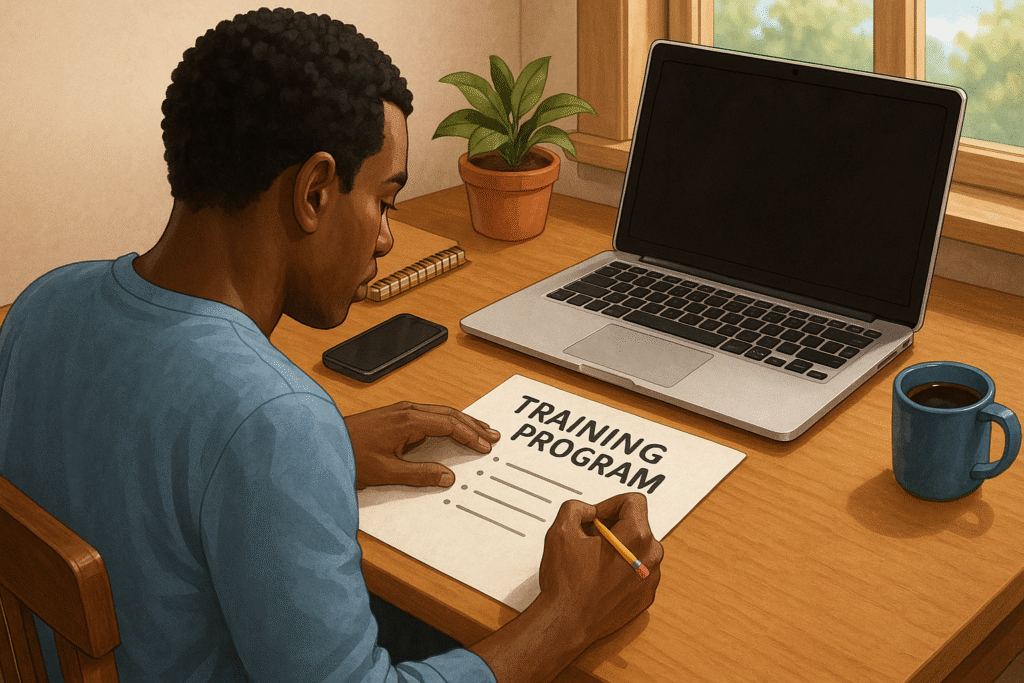
Instructional Design is the process of planning and creating learning experiences that help people gain knowledge and skills in the most effective way. It’s a bit like building a roadmap for learning—starting with what learners need to achieve, choosing the best methods to teach it, and designing materials that are clear, engaging, and purposeful. Whether it’s a course, workshop, or online module, instructional design ensures learning is structured, logical, and genuinely helpful.
Please note that most images on this page are AI generated.
Defence System Approach to Training (DSAT)
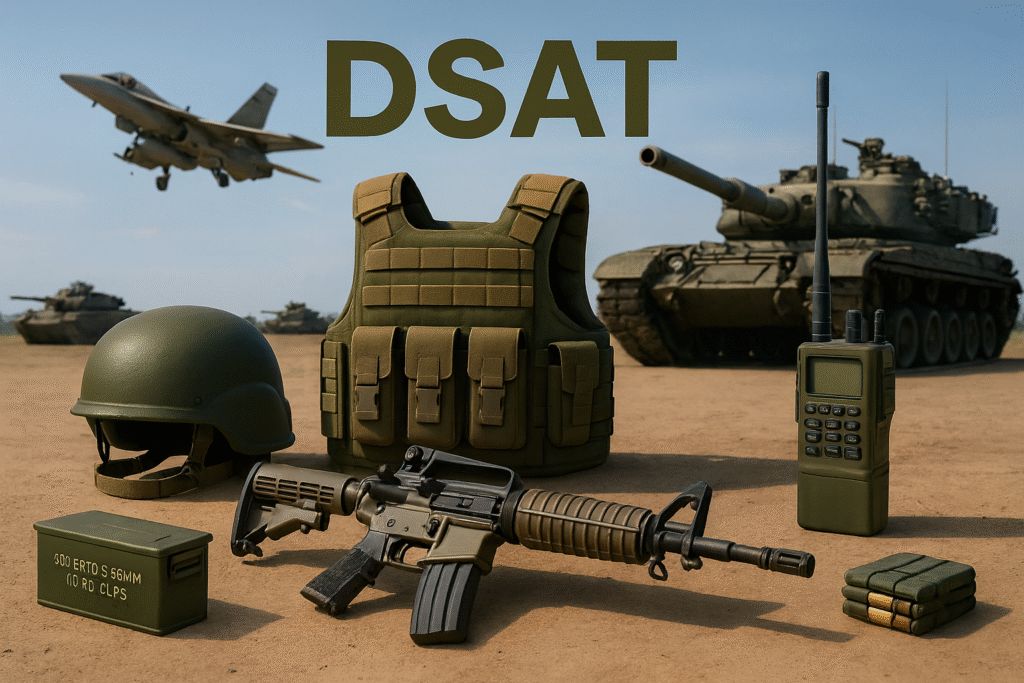
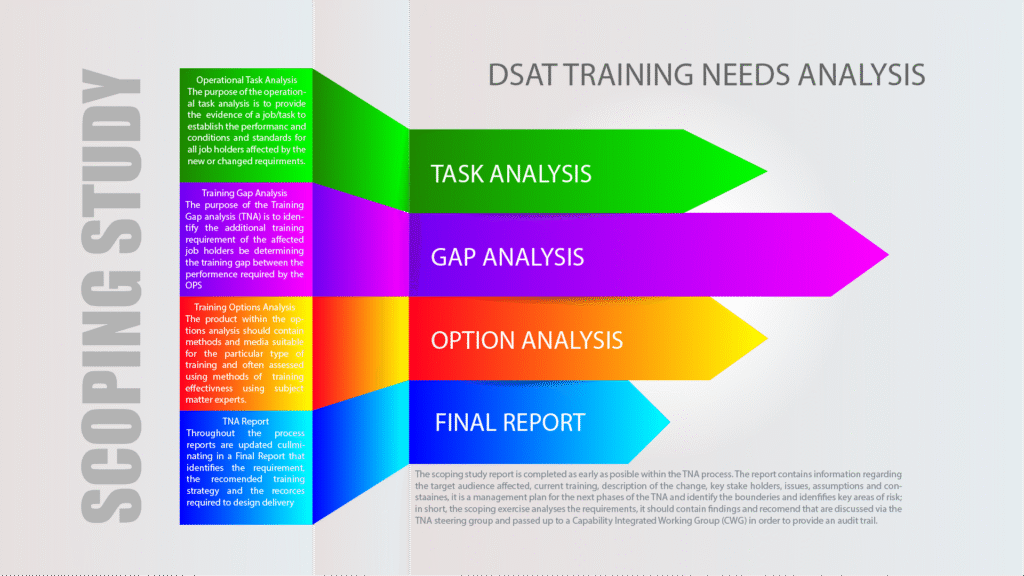
The Defence Systems Approach to Training (DSAT) is the UK military’s mandated, structured methodology for analysing, designing, delivering, and validating training across Defence. Guided by JSP 822, it ensures that all individual and collective training is requirements-based, standardised, auditable, and directly aligned to operational capability.
Analysis – This stage identifies the real training need by examining the gap between required performance and current capability. It focuses on understanding the tasks, skills, and knowledge that personnel must have to meet operational demands.
Design – Here, the structure of the training is planned. Learning outcomes, assessment methods, training strategies, and delivery formats are chosen to ensure the training will meet the identified need effectively.
Development – All training materials and resources are created during this stage, including lesson plans, presentations, activities, assessments, instructor guides, and supporting documentation.
Implementation – This is when the training is actually delivered, whether through instructors, e-learning, simulations, practical exercises, or blended approaches, ensuring learners receive the designed experience.
Evaluation – The final stage checks how well the training worked. Feedback, assessments, and performance data are collected to confirm the training met its goals and to identify any improvements needed for future iterations.
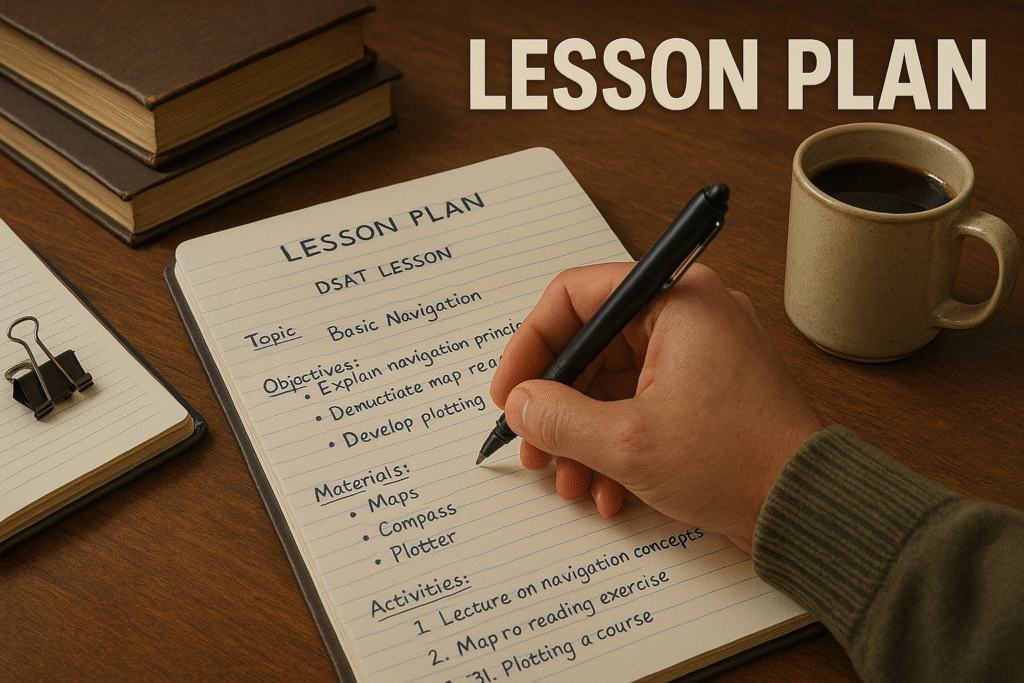
Below is an example of a DSAT lesson plan that illustrates the initial design process. It demonstrates how learning objectives, enabling objectives, activities, and assessment can be structured during the early stages of instructional planning.
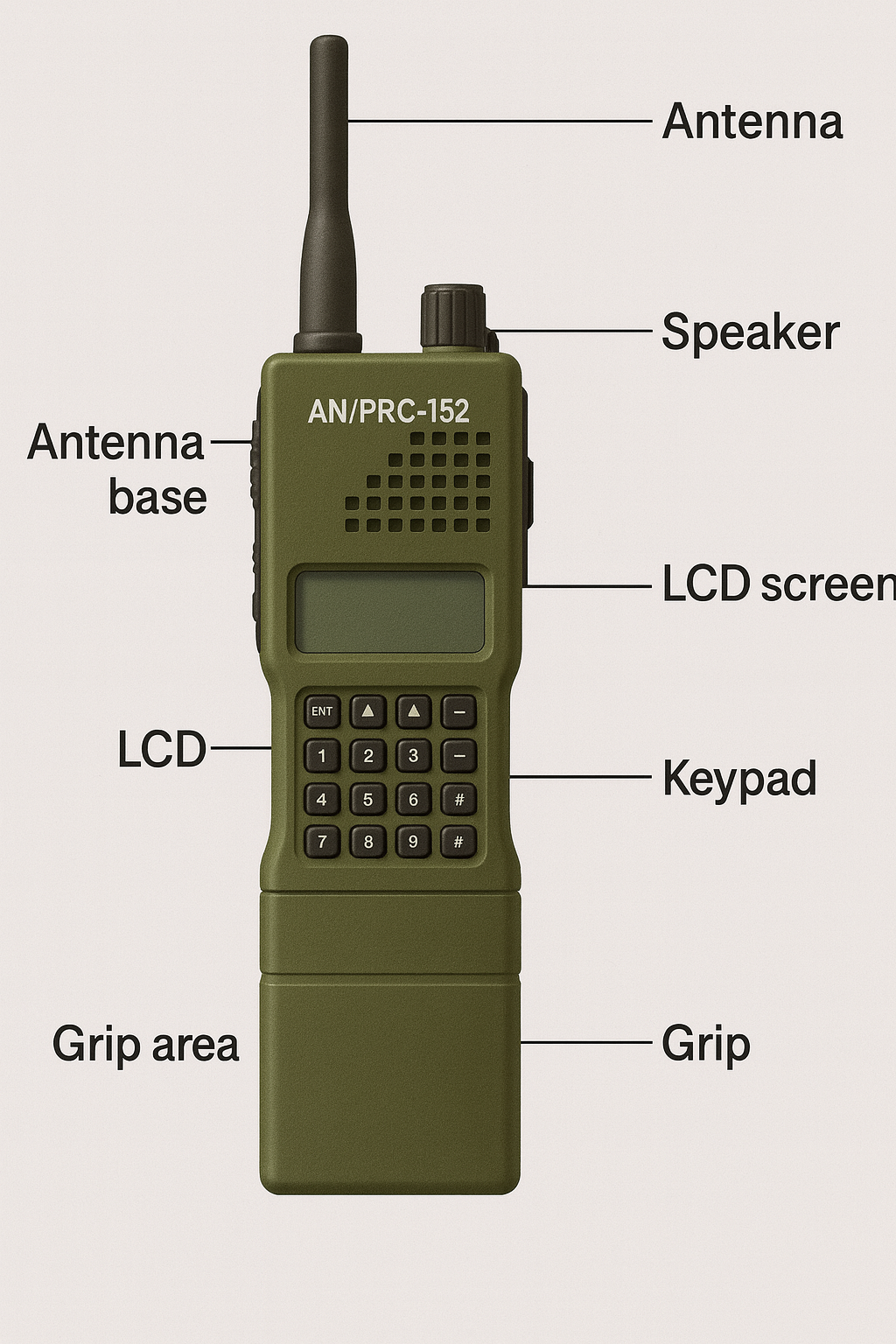
The AN/PRC-152
The aim of this lesson is to train soldiers to safely operate, configure, and conduct a basic radio check using the AN/PRC-152 tactical handheld radio. Below is an example lesson plan for a DSAT Instructional Design program.
Example DSAT Learning plan
Title: Introduction to the AN/PRC-152 Radio
Duration: 60 minutes
Audience: Trained soldiers requiring familiarity with handheld VHF/UHF tactical radios
Instructor: William Harvey________________
Location: Classroom + equipment bay
Classification: Unclassified (Training Keys Only)
Learning Objectives (using Blooms Taxonomy)
LO1 Explain the purpose, features, and components of the AN/PRC-152.
LO2 Demonstrate how to power up the AN/PRC-152 and perform basic configuration, including channel, frequency, and COMSEC settings (training key only).
LO3 Conduct a correct radio check using approved voice procedure (VP).
LO4 Identify and correct common user-level faults on the AN/PRC-152.
LO5 Apply safety, battery management, and care procedures in accordance with equipment guidelines.
Enabling Objectives
EO 1.1 – Identify the AN/PRC-152 controls, keypad functions, ports, display icons, and antenna fitting.
EO 2.1 – Fit the battery and antenna correctly and safely.
EO 1.2 – Describe the operational role and capabilities of the PRC-152 (VHF/UHF, SATCOM, secure modes).
EO 2.2 – Power on, navigate menus, and set the required channel or frequency.
EO 2.3 – Load/select the training COMSEC key and verify correct configuration.
EO 2.4 – Confirm correct transmission mode (PT/CT/TK).
EO 3.1 – Recite the structure of a correct voice-procedure radio check.
EO 3.2 – Conduct a radio check in pairs using correct call signs and acknowledgements.
EO 4.1 – Diagnose common faults: no TX, poor audio, wrong frequency, incorrect encryption.
EO 4.2 – Apply corrective actions using the PRC-152’s menus and external checks.
Introduction (5 min)
- Aim and objectives
- Why the PRC-152 is essential to tactical comms
- Safety and security reminder
Overview & Components (10 min)
Instructor demonstrates:
- Display screen & icons
- Keypad
- PTT and handset ports
- Antenna fitting (NLOS and SATCOM variants)
- Battery compartment
- Capabilities overview (VHF, UHF, DAMA/SATCOM basics, secure modes)
Learner activity: Identify each component on their radio.
Power-Up & Configuration (15 min)
Instructor demonstrates step by step:
- Fit battery & antenna
- Hold Power key
- Menu navigation using keypad
- Selecting channel pre-sets (e.g., CH01 / CH05)
- Setting frequency manually (if required)
- Selecting COMSEC mode (PT/CT/TK – training keys only)
- Volume, squelch, and PTT checks
Learner activity:
Students configure their PRC-152 using an issued exercise setting sheet.
Radio Check (15 min)
Instructor covers:
- Correct VP structure
- Call signs
- Message format
- Acknowledgement procedure
Learner activity:
Paired radio checks such as:
“Alpha 1, this is Bravo 1, radio check—over.”
Instructor circulates and corrects errors in VP or settings.
Fault-Finding (10 min)
Common faults introduced:
- No transmission → Check antenna & PTT
- No reception → Check volume/squelch
- Wrong net → Check channel/frequency
- Cannot TX secure → Check COMSEC mode (training TK)
Learners troubleshoot radios independently then verify fixes.
This is the end of the example lesson. There will be summative and formative evaluations during the lessons.
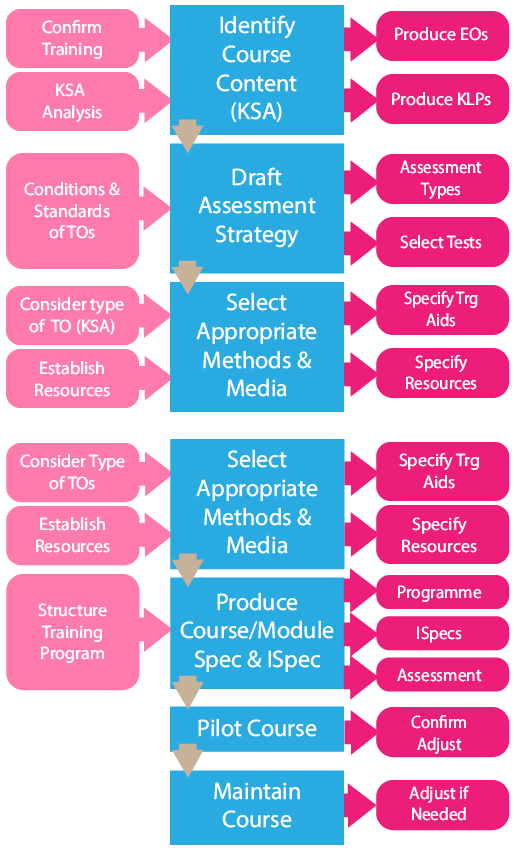
Below is the structure of the DSAT process.
Learning theories are frameworks that explain how people acquire, organize, and apply knowledge and skills, helping educators design more effective learning experiences.
1. Behaviourism – Learning and Reward
From an aviation perspective, behaviourism is all about learning through doing. Pilots and crew build their skills through repetition, feedback and practice, especially in simulators where they can safely rehearse emergency situations. Tools like checklists, standard operating procedures and standardised training help reinforce correct actions until they become second nature. By encouraging consistent and reliable behaviour, this approach plays an important role in reducing human error and keeping flights safe.
2. Cognitivism – Learning by Thinking
From an aviation perspective, cognitivism focuses on how pilots think, make decisions and process information in the cockpit. It recognises that flying is not just about physical actions, but also about memory, attention, problem-solving and situational awareness. Training therefore encourages pilots to understand why things happen, not just what to do, especially during complex or unexpected situations. By supporting clear thinking and good decision-making, cognitivism helps pilots manage workload and maintain safety in a calm and confident way.
3. Constructivism – Learning by Doing
From an aviation point of view, constructivism highlights the idea that pilots learn best by building knowledge through experience. Rather than simply being told what to do, learners are encouraged to think, reflect and make sense of real-life flying situations, often through scenario-based training and simulator exercises. By discussing mistakes, sharing experiences and working through problems, pilots develop a deeper understanding of how and why things happen. This hands-on, reflective approach helps build confidence, judgement and long-term learning for safe flying.
4. Experiential Learning – Learning from Experience
From an aviation point of view, experiential learning is about gaining knowledge through real flying experiences and reflecting on them afterwards. Pilots learn not just from textbooks, but from what they see, feel and do in the aircraft and the simulator. By reviewing each flight, discussing what went well and what could be improved, they turn experience into understanding. This reflective approach helps pilots grow in confidence, skill and decision-making, supporting safer and more thoughtful flying.
5. Andragogy – How Adults Learn
From an aviation point of view, andragogy recognises that pilots are adult learners who bring their own experience, motivation and goals into training. They learn best when the training is relevant to real flying, problem-centred and linked to their everyday responsibilities in the cockpit. Instructors act more as guides than lecturers, encouraging discussion, reflection and shared learning. This respectful, practical approach helps pilots stay engaged, take responsibility for their development and continuously improve their performance.
6. Transformative Learning – Learning that Changes You
From an aviation point of view, transformative learning happens when pilots reflect deeply on their experiences and sometimes change the way they think about flying, safety or decision-making. This often follows a challenging moment, such as a difficult flight or a simulator scenario that didn’t go as planned. Through discussion, feedback and reflection, pilots gain new perspectives and grow in confidence and judgement. This type of learning supports lasting improvements in attitude, behaviour and overall airmanship.
7. Problem-Based Learning – Learning by Solving Real Problems
From an aviation point of view, problem-based learning encourages pilots to learn by working through realistic flying challenges. Instead of being given all the answers, trainees are presented with situations such as system failures or poor weather and are guided to analyse the problem, make decisions and find solutions. This hands-on approach builds confidence, teamwork and strong decision-making skills. By learning through real-world problems, pilots become more adaptable and better prepared for the unexpected.
8. Montessori – Learning at Your Own Pace
From an aviation point of view, a Montessori-style approach to learning would encourage student pilots to take an active, self-directed role in their training. Learners explore skills at their own pace through hands-on practice, using simulators, flight tools and guided activities to build confidence and understanding. Instructors provide support and guidance rather than constant instruction, allowing pilots to develop independence and curiosity. This nurturing, learner-centred style helps build strong foundations in both skill and self-confidence for flying.
9. Apprenticeship – Learning from a Mentor
From an aviation point of view, an apprenticeship approach to learning allows student pilots to learn alongside experienced instructors and captains in real flying environments. By observing, practising and gradually taking on more responsibility, learners build skills, confidence and professional habits over time. Guidance, feedback and encouragement play a key role at every stage. This supportive, hands-on way of learning helps develop strong airmanship and prepares pilots for the realities of the flight deck.
10. Situated Learning – Learning in Real Life
From an aviation point of view, situated learning means that pilots learn best within the real context of flying and everyday operational environments. By training in the cockpit, the simulator and alongside experienced crew, learners pick up skills, decision-making habits and professional behaviours naturally through participation. Learning becomes part of the job rather than something separate from it. This real-world approach helps pilots feel more confident, capable and prepared for the realities of flight.

Pedagogy is the art, science, and practice of teaching, which includes the strategies, methods, and approaches instructors use to support trainees learning, thinking, and development.
It covers everything from how lessons are planned and delivered, to how instructors motivate trainees, create learning experiences, assess understanding, and adapt instruction to different learners’ needs.
The ADDIE model is a step-by-step process used to create effective training and learning experiences. It starts with Analyse, where you figure out what learners need. Then comes Design, where you plan the lessons, activities, and assessments. In the Develop stage, you create the actual materials. Next is Implement, where the training is delivered to learners. Finally, in the Evaluate stage, you check what worked well and what can be improved. ADDIE helps ensure learning is clear, organized, and successful.
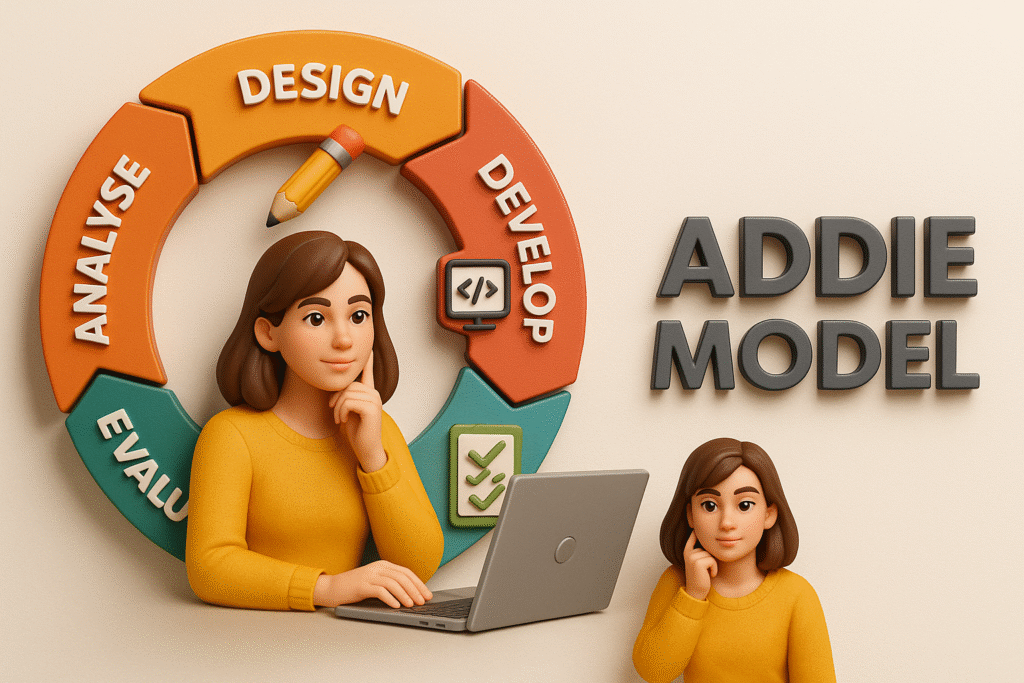
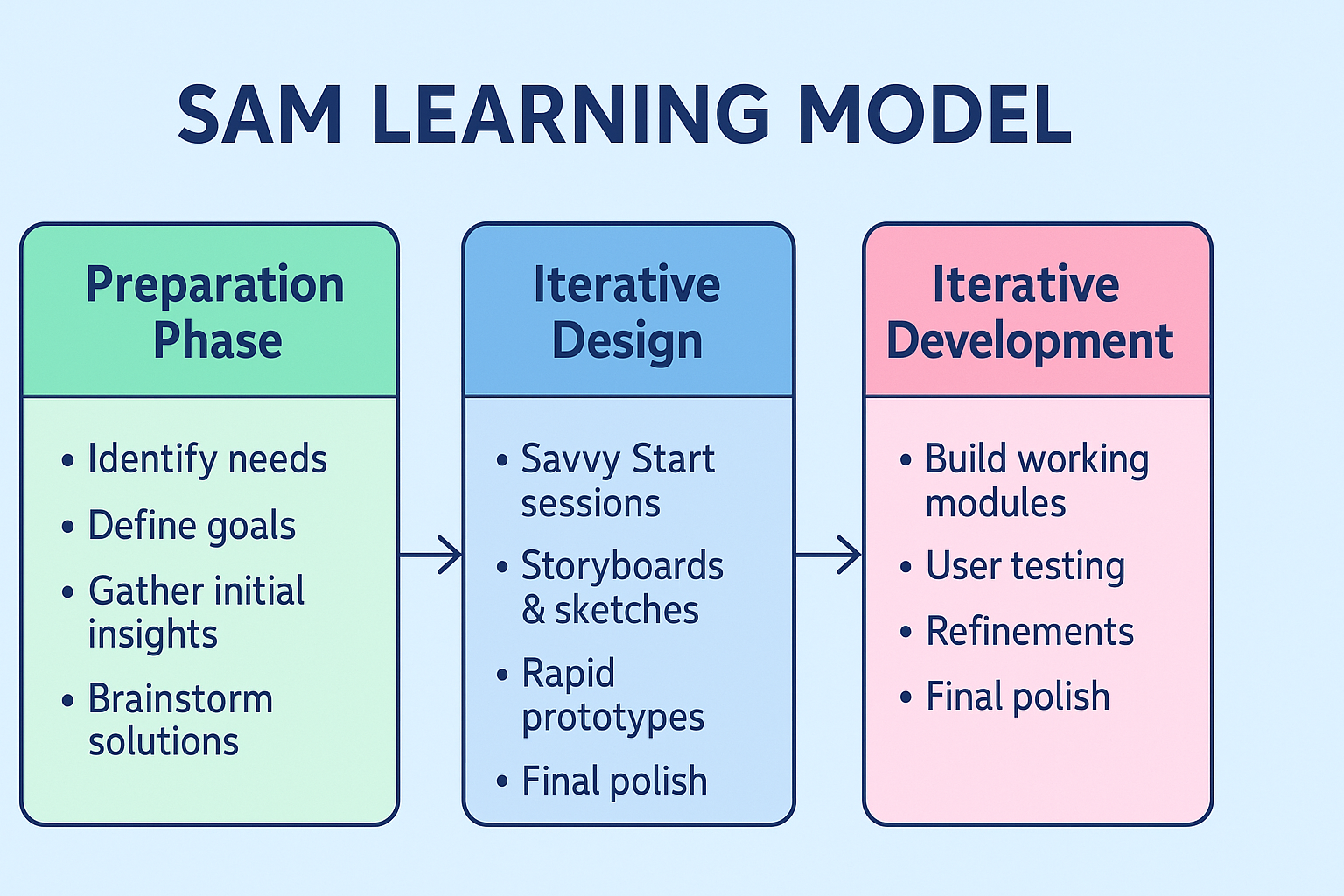
The SAM Model (Successive Approximation Model) is a flexible and fast instructional design process that uses quick, repeated cycles to plan, design, test, and improve learning materials. Instead of following a strict step-by-step path, SAM focuses on brainstorming, creating small prototypes, getting frequent feedback, and constantly refining the design. This makes it ideal for projects that need rapid development, collaboration, and continuous improvement.